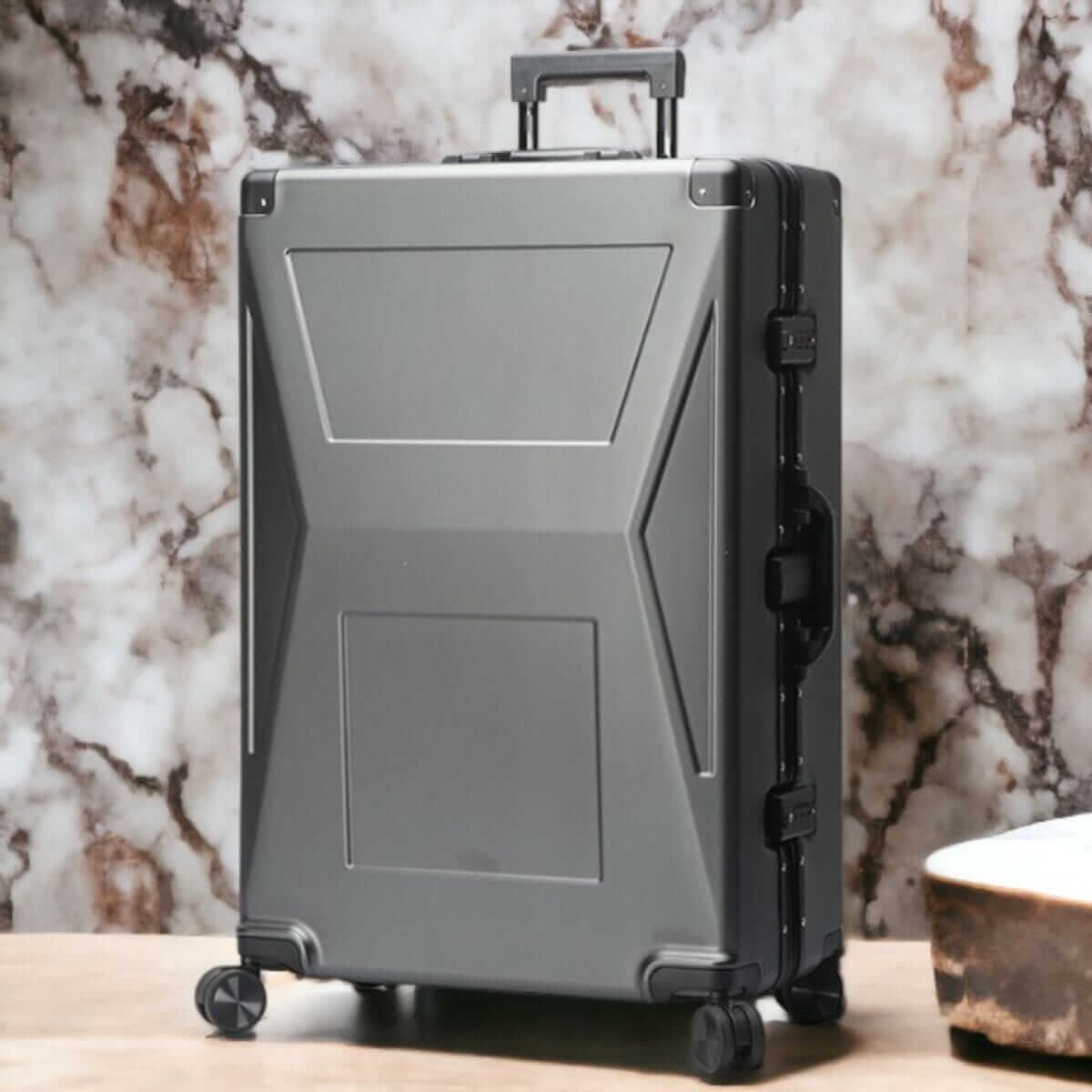

Short answer: treat a hardside suitcase as two separate boxes. Put heavy, flat items (shoes, toiletry bag, denim) in the side nearest the wheels, softer clothes in the other side, strap each half down tight, and fill every gap. A hardshell does not stretch, so the goal is a firm, even pack that closes without force.
Here is the method step by step.
Why hardside packing is different
A softside bag has give: you can overfill it and lean on the lid. A hardside suitcase opens like a clamshell into two halves, and the shell keeps its shape. That's why it protects your things well, and also why sloppy packing shows: items slide, one half bulges, and the zipper fights you. (Still choosing a bag? See hardside vs softside luggage.)
Step 1: Lay out everything and cut 20%
Put everything on the bed first. Remove anything you're packing "just in case" and plan outfits that share shoes. This is the single biggest step toward a suitcase that closes easily.
Step 2: Decide which half is the "heavy" half
With the suitcase standing up, the half nearest the wheels and handle base carries weight best. Pack it with:
- Shoes (soles toward the shell, in shoe bags)
- Your toiletry bag
- Jeans, sweaters and other heavy items
Heavy items at the bottom keep the bag stable when it stands and rolls, especially on a spinner. (More on wheel types in our spinner vs two-wheel luggage guide.)
Step 3: Roll the casual clothes, fold the structured ones
Roll t-shirts, gym clothes and underwear: they fill gaps and wrinkle less. Fold shirts, dresses and blazers flat and lay them in the lighter half, with full-length items laid out first and their ends folded over the top of the pile at the end.
Step 4: Fill every gap
Socks go inside shoes. Belts run around the edge of the shell. Chargers and cables go into small pouches in the corners. A hardside case is strongest when its contents can't move.
Step 5: Use the compression straps (and the divider)
Most hardside suitcases have cross straps on one side and a zip divider on the other. Pull the straps tight over each layer. This keeps clothes in place if the bag is handled roughly and makes the two halves close evenly.
Step 6: Keep batteries and valuables out of checked bags
If you're checking the suitcase, take out spare lithium batteries and power banks. The FAA says they must go in carry-on baggage only. Keep laptops, medications, documents and anything valuable in your carry-on or backpack too. Liquids in a carry-on must follow the TSA's 3.4 oz (100 ml) containers in one quart-size bag rule; full-size toiletries can go in the checked bag, sealed in a zip bag in case of leaks. Check what isn't allowed in checked luggage before you close it.
Step 7: Close it without force
Bring both halves together and zip slowly. If you need to sit on it, take something out. Forcing a hard shell shut strains the zipper and the frame. Then lock it with the built-in lock or a TSA-approved luggage lock, so screeners can open it without cutting anything.
Quick checklist
- Heavy items in the wheel-side half
- Rolled soft clothes, flat-folded structured clothes
- Gaps filled, straps tight
- Power banks and spare batteries in your carry-on
- Liquids sealed in zip bags
- Closes without force; lock set
Packing a hardside carry-on
The same method works for a carry-on, with one change: put the items you'll need at security (liquids bag, laptop if it's not in your backpack) where you can reach them without unpacking. If you travel carry-on only, our carry-on vs checked bag guide covers when that works best.
The suitcases we make for this
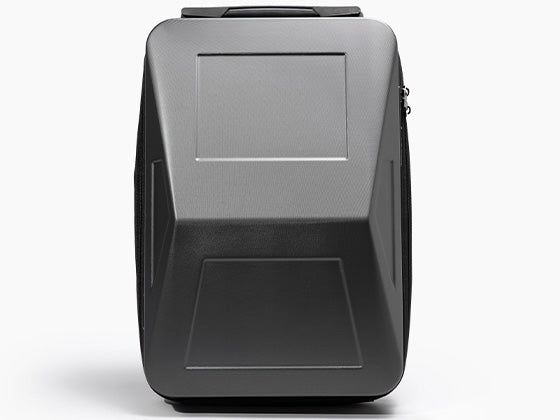
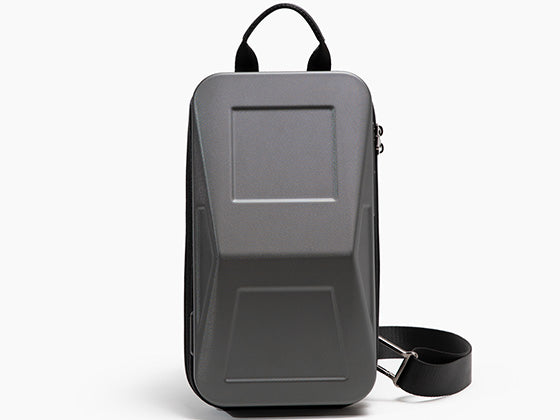
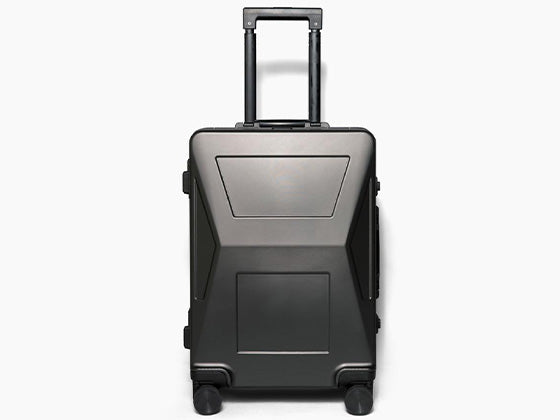
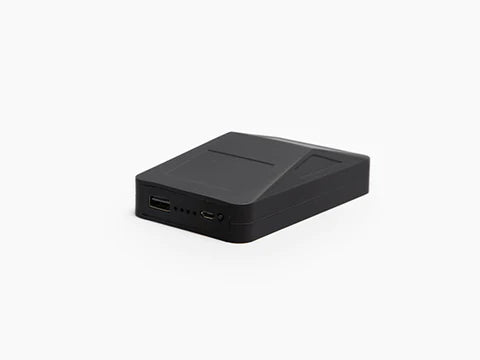
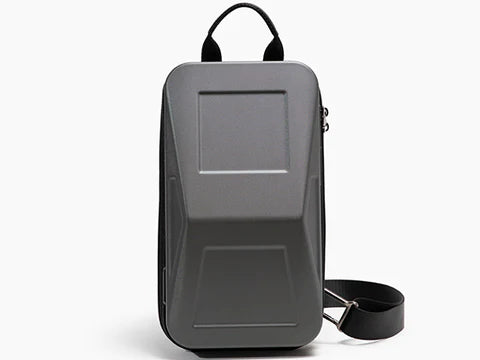
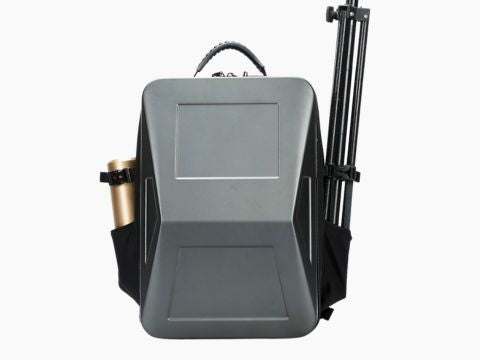
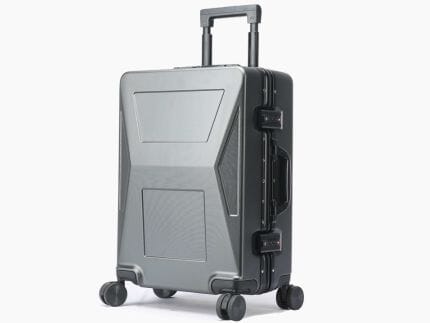
Our Cyber Suitcase check-in and Cyber Luggage carry-on both have a 100% polycarbonate hardshell, zippered accessory pockets and adjustable compression straps inside, a TSA-approved passcode lock and an 8-wheel 360-degree spinner system. The carry-on has a USB port for your own power bank (sold separately) and is designed as a carry-on, not for check-in. They're independent designs inspired by the Tesla Cybertruck, not made or endorsed by Tesla.
FAQ
Is it better to roll or fold clothes in a hardside suitcase?
Both. Roll soft, casual items to fill space and reduce creases; fold structured clothes flat so they keep their shape.
Which side of a hardside suitcase should be heavier?
Put heavier items in the half closest to the wheels, toward the bottom when the bag stands up. It keeps the bag stable while it rolls.
Can I overpack a hardside suitcase?
Not safely. A hard shell does not expand like fabric, and forcing it shut strains the zipper. If it won't close easily, remove something.
Can I pack a power bank in my checked suitcase?
No. Spare lithium batteries and power banks must travel in the cabin under FAA rules.
Rules referenced are as of November 2026. Always confirm with your airline before you fly.