
Short answer: yes, you can fly with "smart" luggage, meaning a suitcase or backpack with a USB port or built-in battery. In the U.S. the battery sets the rules. A bag with a lithium battery has to stay in the cabin with you. If the bag is going to be checked (including at the gate), the battery has to come out and ride in the cabin. Power banks are never allowed in checked bags.
Here is the detail, including the new 2026 airline limits that catch a lot of travelers out.
Rules change. This guide reflects FAA and airline guidance as of November 2026. Always check your airline's page before you fly.
The FAA rule for bags with batteries
The FAA's PackSafe page on baggage with lithium batteries says these bags must be carried as carry-on baggage unless the batteries are removed. The only batteries allowed to stay in a checked bag are tiny ones: lithium-ion of 2.7 Wh or less, or lithium metal with 0.3 g or less of lithium (think small tracker tags).
In practice, that gives you a simple test before you buy: can the battery come out? Most major U.S. airlines have required removable batteries in smart bags since early 2018 (see American Airlines' smart bag policy announcement). A suitcase with a sealed-in battery is a gamble every time a gate agent says "we're checking bags today."
The power bank rule
Per the FAA's airline passengers and batteries guidance:
- Spare lithium batteries, including power banks, must be in your carry-on. They cannot be checked.
- Up to 100 Wh: allowed for personal use.
- 101 to 160 Wh: needs airline approval, two spares maximum.
- Over 160 Wh: not allowed on passenger planes.
- Airlines may set stricter limits than the FAA.
How to turn mAh into Wh
Power banks are labeled in mAh, but the rules use watt-hours. The formula is Wh = (mAh / 1,000) x volts. Most lithium-ion cells are rated at a nominal 3.7 V, so a 4,000 mAh power bank works out to about 14.8 Wh, far under the 100 Wh line. Even a large 20,000 mAh bank is about 74 Wh. Check the label on yours: many list the Wh rating directly.
The new part: 2026 airline restrictions
The FAA rules have not changed much, but airlines have tightened their own policies after a string of battery fires in cabins:
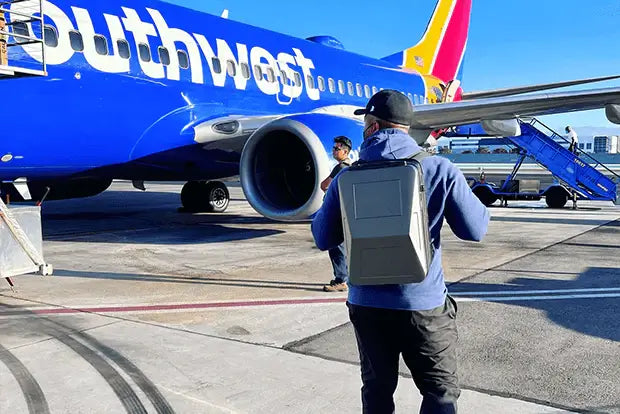
- Southwest Airlines (from April 20, 2026): one power bank per passenger, visible while in use, not in the overhead bin.
- American Airlines (from May 1, 2026): up to two power banks, visible while in use, not in the overhead bin.
- Lufthansa Group airlines (including Lufthansa, Swiss and Austrian): no using or charging power banks on board, and they must stay at your seat, not in the overhead bin.
- Several Asia-Pacific and Middle East carriers, including Emirates, Singapore Airlines, Cathay Pacific, Qantas and Korean Air, ban or tightly restrict power bank use in flight.
Sources: U.S. PIRG and Frommer's. These policies are changing fast, so confirm with your airline.
What this means for smart luggage: a suitcase whose USB port runs off a separate power bank is the easiest kind to live with. The bag itself is just a bag. The battery is a normal power bank that you keep with you, under the seat or in your pocket.
Gate-check survival plan
The most common way to break the rules by accident: your carry-on gets tagged at the gate. Do this:
- Before you hand it over, unplug and remove the power bank and any spare batteries.
- Keep them in your jacket, personal item or backpack.
- Take out laptops too. Devices in checked bags must be fully powered off, and you do not want them below deck anyway.
Packing the battery in an outside pocket or right on top makes this a 10-second job instead of a scramble.
Is smart luggage worth it?
Worth it if: you live on your phone in airports, hate hunting for outlets at the gate, and want one less thing to dig out of your bag.
Skip it if: you fly airlines that ban power bank use anyway, or you already carry a charger in your backpack and never check it. A USB port is a convenience, not a requirement.
When you shop, look for: a removable or separate battery, a port that is easy to reach, and a hard shell that protects the electronics inside. For more on that last point, see hardside vs softside luggage.
Our smart carry-on

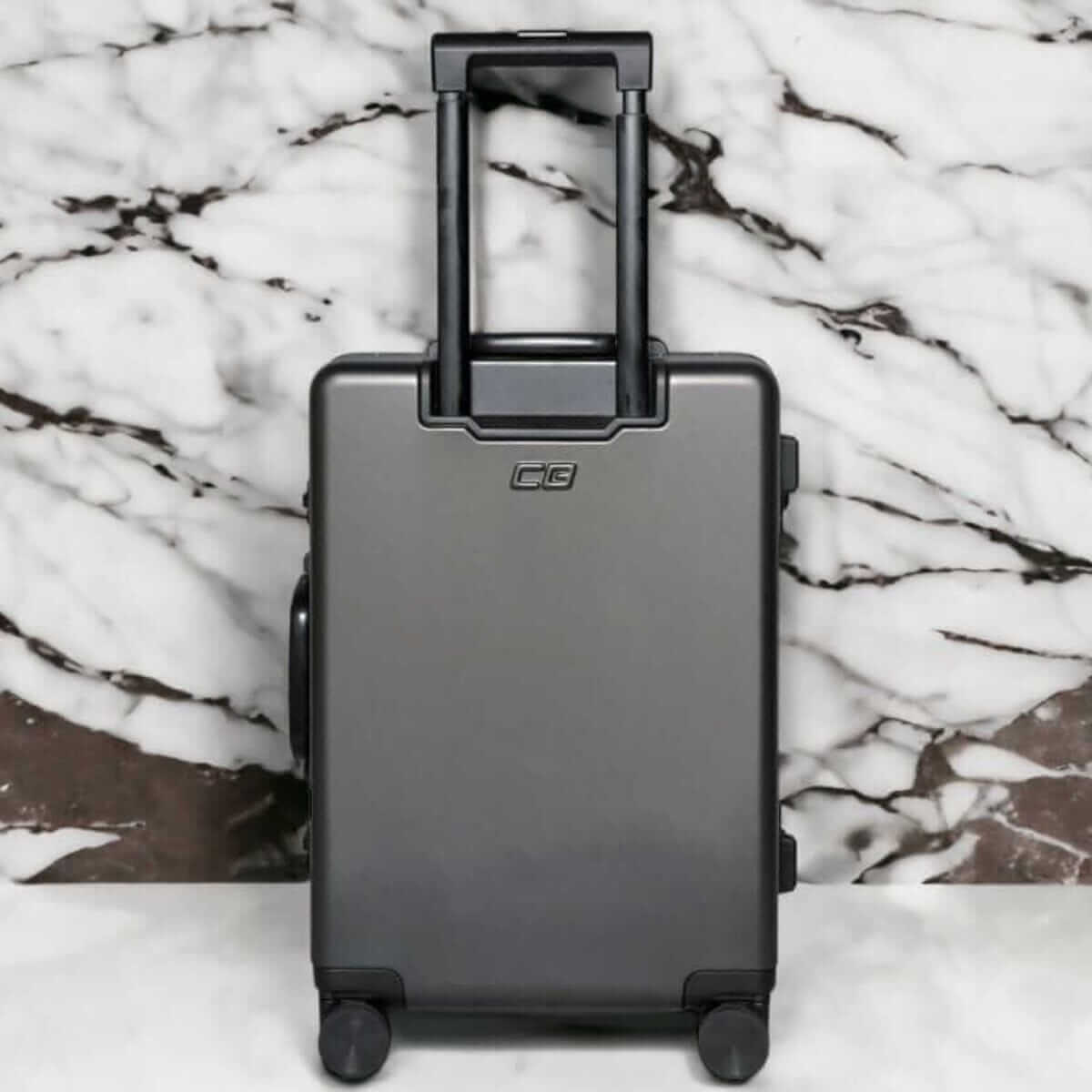
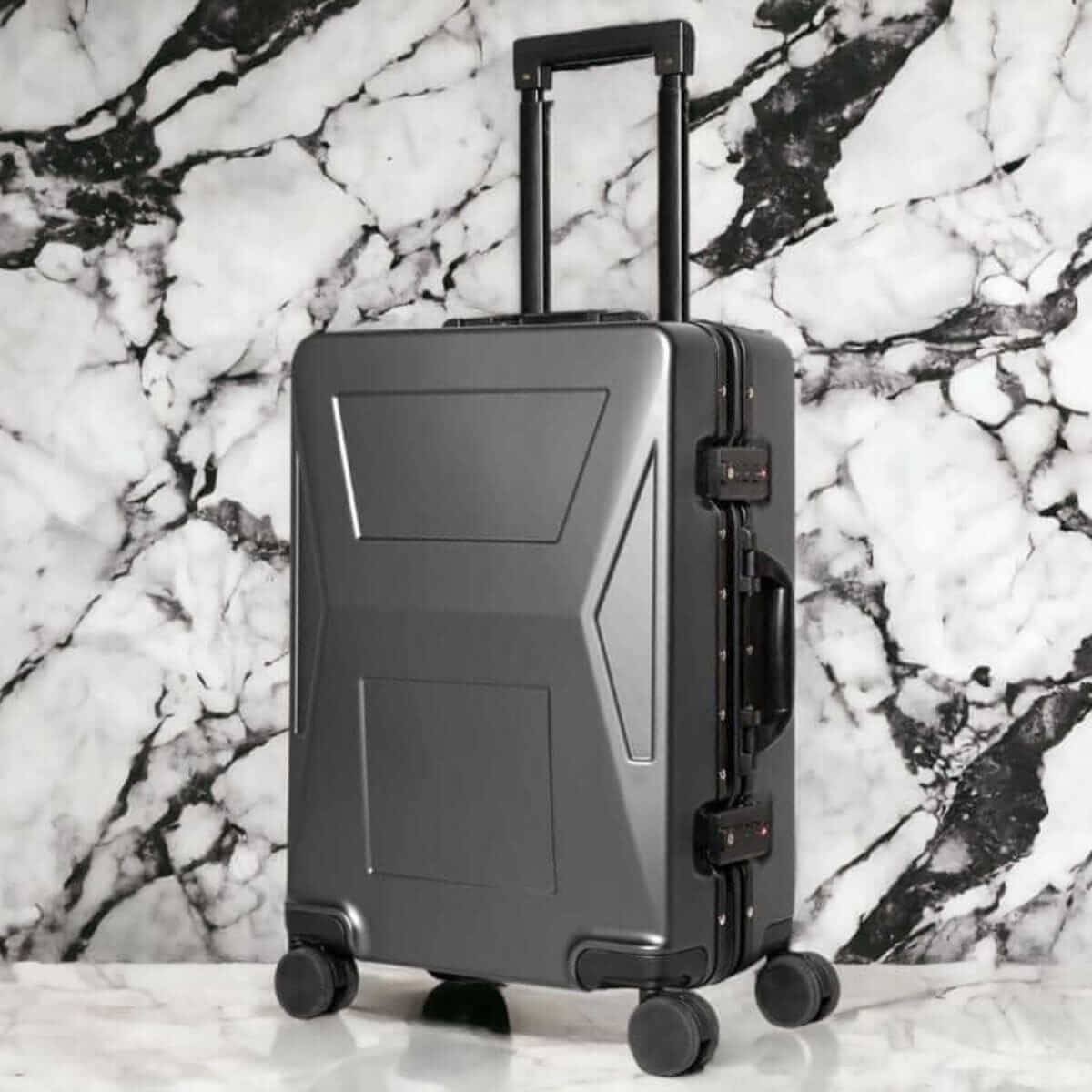
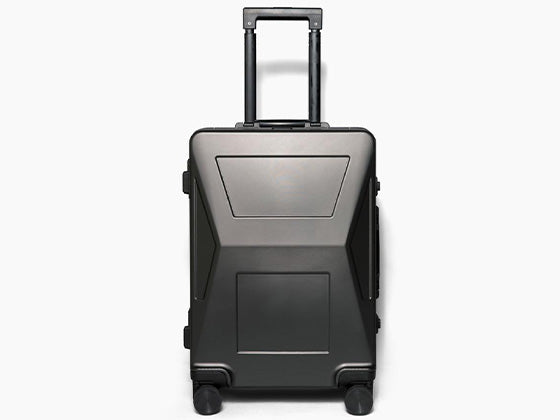
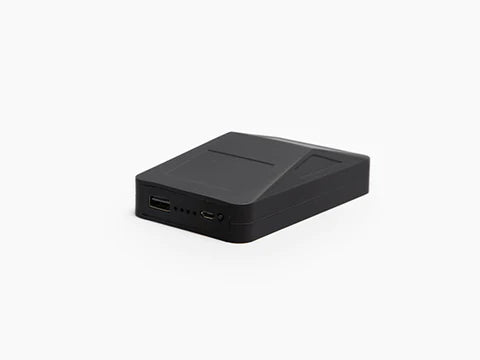
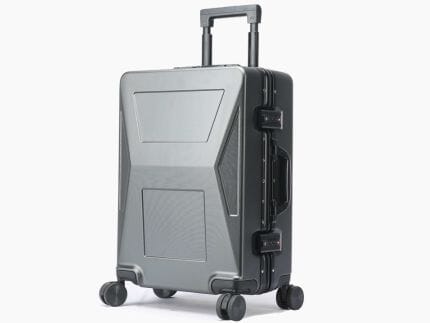
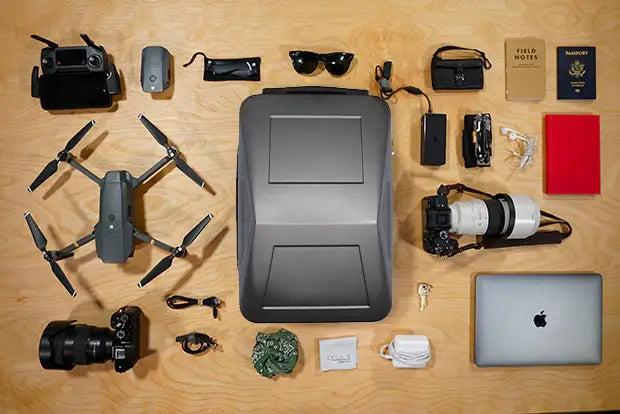
The CYBER LUGGAGE: CARRY-ON has a USB charging port that works with a power bank, so you can top up your phone at the gate. It also has a 100% polycarbonate hardshell, a TSA-approved passcode lock and 8 spinner wheels. Our CYBER POWERBANK 4000mAh is about 14.8 Wh by the math above, and it fits easily in a pocket when a gate agent comes calling. Check what your airline allows before you fly.
FAQ
Can I check a suitcase with a USB port?
Yes, if there is no battery inside. A USB port with no battery attached is just a cable. Remove the power bank first and carry it on.
Do I have to tell the airline about my smart bag?
Usually not for a carry-on with a small power bank. Batteries over 100 Wh need airline approval.
Does TSA check power banks?
TSA screens them like any other electronics, so keep them easy to reach. Battery limits are FAA and airline rules, so follow both.
Are charging backpacks allowed on planes?
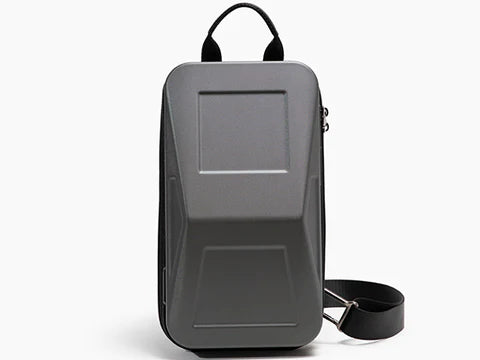
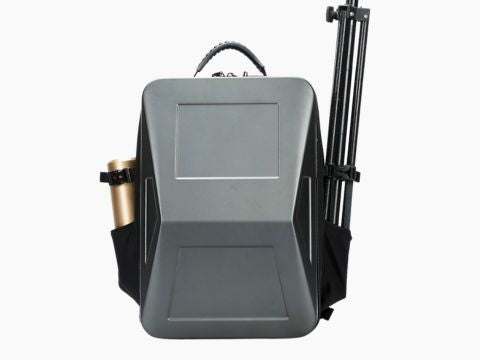
Yes. The same battery rules apply. See are charging backpacks allowed on planes?
What else can't go in checked luggage?
Quite a lot. See what items are not allowed in checked luggage.
Fly charged, fly legal. Shop Cyberbackpack luggage.